Player Retention
-
•6 min read
A game needs to have a way to keep players engaged so that they keep playing. There needs to be something for them to keep coming back for more. This can be achieved through different methods depending on the type of game but the main premise remains the same. There needs to be long-term value for the player for them to invest their time.
What Motivates Players? #
Players are motivated by feeling a sense of accomplishment after achieving a goal or objective. This means designing a system that rewards players for their time and effort. This could involve long-term objectives such as unlocking new characters, acquiring new tools, earning new achievements etc. The key is to make progress feel meaningful, make the players motivated to continue to reach the next milestone. The player should be able to perceive their progression within the game so that it makes them feel that they are getting better at the game.
Avoiding Repetition #
For my dungeon exploration game, I initially thought about making premade levels with different environments and encounters. This approach would work however I realised that the game can become stale if it becomes too repetitive. Plus, manually creating the levels and connecting all the rooms together including the starting room and finish room takes time. After a single playthrough, the game can quickly become predictable and lacks replay value. Without new challenges, the players might question the incentive to revisit the game. Due to these reasons, I decided to implement a procedural generation system for the game's levels.
Generating Uniqueness #
The benefits of going with a procedural generation approach is that it creates a unique experience every time the game is played. This makes the game less predictable and more interesting. This could be a new dungeon level layout with potentially more rooms or less rooms. There is more flexibility and customizable options which makes procedural generation a really good option to use. I also found that it helped me to refine the other core gameplay mechanics like combat and character progression instead of spending time building each dungeon level manually.
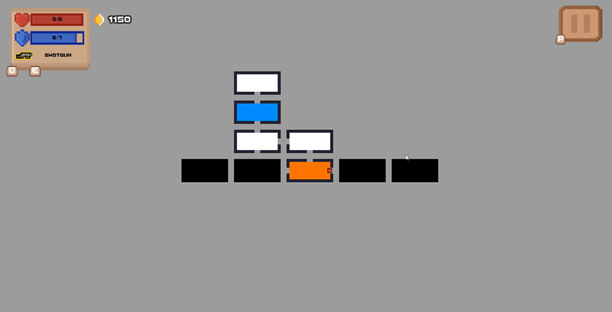
Offloading level designs to algorithms does work but there are also drawbacks like balancing game difficulty and making sure the experience isn't broken. For example, you don't want the starting room and the finish room to be connected together. Testing is a key part of this process so there's some tweaks that need to be made in certain areas. In my case, I had to define rules and constraints for the procedural generation to follow such as having restrictions on minimum and maximum dungeon level sizes. Rules are important to make sure that there is a baseline of quality and prevent nonsensical layouts that can break a game.